

What is the production process of GHRP?
Leave a message

Hey there! As a GHRP (Growth Hormone Releasing Peptide) supplier, I'm super stoked to walk you through the production process of GHRP. It's a pretty fascinating journey, from the raw materials to the final product that hits the market. So, let's dive right in!
Step 1: Raw Material Selection
The first and most crucial step in the GHRP production process is selecting the right raw materials. We're talking about high - quality amino acids, which are the building blocks of peptides. These amino acids need to meet strict quality standards. We source them from trusted suppliers who have a proven track record of providing pure and reliable ingredients.
Why is this so important? Well, the quality of the raw materials directly impacts the quality of the final GHRP product. If the amino acids are contaminated or of low purity, it can lead to a less - effective peptide or even unwanted side effects. It's like building a house; if you start with shoddy bricks, the whole structure will be at risk.
Step 2: Peptide Synthesis
Once we've got our top - notch amino acids, it's time for peptide synthesis. There are two main methods for this: solid - phase peptide synthesis (SPPS) and liquid - phase peptide synthesis. At our place, we mainly use SPPS because it offers better control over the reaction and is more efficient for large - scale production.
In SPPS, the first amino acid is attached to a solid support, usually a resin. Then, one by one, the other amino acids are added in a specific sequence. Each addition is followed by a reaction to remove the protective group on the amino acid, allowing the next one to be linked. This process is repeated until the entire peptide chain is built. It's a bit like assembling a puzzle, but instead of pieces, we're working with tiny amino acids.
The reaction conditions, such as temperature, pH, and reaction time, are carefully monitored. Even a small deviation can affect the quality and yield of the peptide. We use advanced equipment and techniques to ensure that the synthesis process goes smoothly and precisely.
Step 3: Cleavage and Deprotection
After the peptide chain is fully synthesized, we need to separate it from the solid support and remove the remaining protective groups. This is done through a cleavage reaction. Special reagents are used to break the bond between the peptide and the resin.
The deprotection step is equally important. The protective groups that were added during the synthesis process need to be removed to expose the functional groups of the amino acids. This is crucial for the peptide to have its biological activity. If not done correctly, the peptide might not work as intended.
Step 4: Purification
At this stage, the peptide is still a mix of the target peptide and other by - products and impurities from the synthesis process. That's where purification comes in. We use a variety of purification techniques, with high - performance liquid chromatography (HPLC) being one of the most common ones.
HPLC separates the peptide based on its chemical properties, such as size, charge, and hydrophobicity. It allows us to isolate the pure GHRP from the mixture. After purification, we test the purity of the peptide using analytical methods like mass spectrometry. We aim for a purity level of at least 95% or higher. A pure peptide not only ensures better efficacy but also reduces the risk of allergic reactions or other adverse effects in users.
Step 5: Lyophilization
Once the peptide is purified, we move on to lyophilization, also known as freeze - drying. This process involves freezing the peptide solution and then removing the water under vacuum. Lyophilization has several advantages. It extends the shelf life of the peptide by preventing degradation caused by water and microorganisms. It also makes the peptide easier to store and transport.
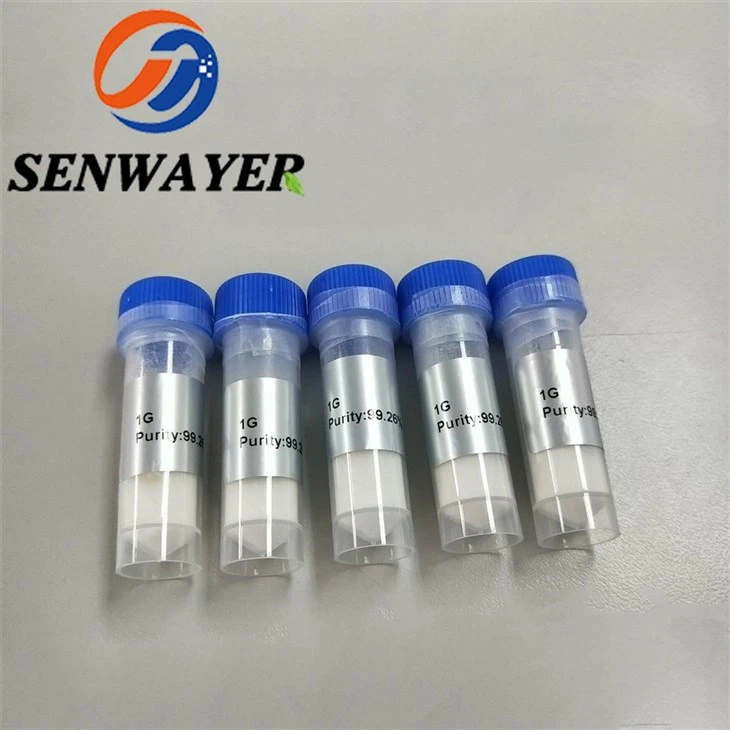
The final product is a dry, powdery form of GHRP. This powder can be easily reconstituted with a suitable solvent before use.
Step 6: Quality Control
Quality control is an ongoing process throughout the production of GHRP, but it's especially important at the end. We conduct a series of tests to ensure that the final product meets all the required standards.
We test for purity, identity, and biological activity. Purity is checked using techniques like HPLC and mass spectrometry. Identity is confirmed through methods like nuclear magnetic resonance (NMR). Biological activity is measured using in - vitro and in - vivo assays. We also test for contaminants, such as endotoxins and microbial impurities. Only when the product passes all these tests can it be released for sale.
Our Other Peptide Products
In addition to GHRP, we also offer a range of other high - quality peptide products. For example, we have the Anti - Wrinkle Cosmetic Peptide Raw Powder Hexapeptide - 11 CAS 161258 - 30 - 6. This peptide is great for anti - aging applications and can help reduce the appearance of wrinkles.
Another product is the Skin Care Peptide Oligopeptide - 68 CAS 1206525 - 47 - 4. It's designed to improve skin health and appearance. And if you're interested in weight loss, we have the New Weight Loss Cagrilintide Peptide Powder Cas 1415456 - 99 - 3.
Contact Us for Procurement
If you're in the market for high - quality GHRP or any of our other peptide products, don't hesitate to reach out. We're committed to providing the best products and excellent customer service. Whether you're a researcher, a manufacturer, or someone looking for a reliable peptide supplier, we've got you covered. Start a conversation with us today to discuss your procurement needs, and let's work together to get you the best peptide solutions!

References
- Alberts, B., Johnson, A., Lewis, J., Raff, M., Roberts, K., & Walter, P. (2002). Molecular Biology of the Cell. Garland Science.
- Jones, J. (2002). Amino Acid and Peptide Synthesis. Oxford University Press.
- Fields, G. B., & Noble, R. L. (1990). Solid - phase peptide synthesis utilizing 9 - fluorenylmethoxycarbonyl amino acids. International Journal of Peptide and Protein Research, 35(1), 161 - 214.


